Retinol Burning or Peeling? When to Pause and Ask for Help

Burning, persistent soreness or a spreading rash after retinol should not be dismissed as proof that it is working. Pause the product causing the reaction and ask for advice; “purging” is not a diagnosis that makes every new symptom safe.
A new breakout and irritated skin are different questions
People often use “purging” to describe any change after starting an active skincare product. That label does not identify the cause. Note whether the change is new pimples, diffuse burning, tightness, peeling, swelling or an itchy rash. More than one problem may be present, and timing alone cannot establish which ingredient is responsible.
Retinol belongs to the broader retinoid family, which also includes medicines such as adapalene and tretinoin. These products are not interchangeable simply because the names sound related. A prescription plan, an over-the-counter cosmetic and an oral retinoid have different instructions and risks. This guide concerns reactions to products applied to the skin; it does not provide an oral-retinoid regimen.
What the medical guidance says about irritation
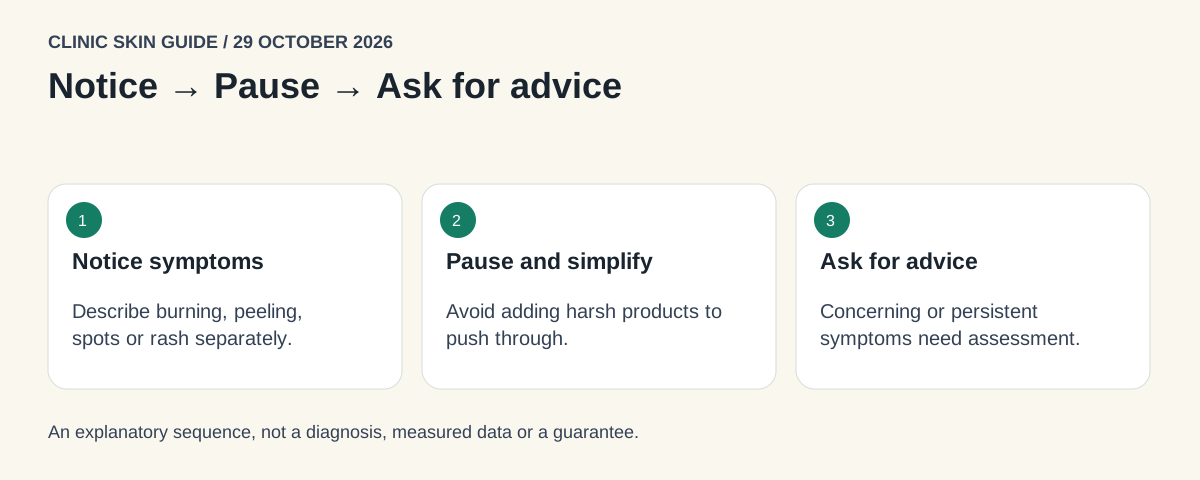
- Notice symptomsDescribe burning, peeling, spots or rash separately.
- Pause and simplifyAvoid adding harsh products to push through.
- Ask for adviceConcerning or persistent symptoms need assessment.
Explanatory sequence, not a diagnosis. View the static graphic.
DermNet lists redness, peeling and dry skin among retinoid-related dermatitis effects, along with irritant contact dermatitis and, less commonly, allergic contact dermatitis. It also notes irritation near the eyes and lips. A reaction therefore deserves attention rather than being treated as a necessary badge of progress.
The American Academy of Dermatology recommends choosing a suitable product, beginning cautiously and using moisturiser to limit irritation. It warns that irritation can trigger dark marks in darker skin tones. A stronger or more frequently used product is not automatically a better choice. Ask the prescribing clinician how to adjust a prescribed treatment rather than inventing a new schedule from an online routine.
What to do when a product is hurting
Pause the suspect product if it causes burning, a rash or persistent discomfort. Avoid adding a scrub, peel or another strong active to “push through.” Keep a record of what you used and contact a pharmacist or clinician for advice about the reaction and your next step. Do not deliberately retry a product that caused a significant reaction without professional guidance.
Keep the rest of the routine simple and use products you already tolerate. Protect skin from the sun with shade, clothing and a tolerated sunscreen. If ordinary skincare also stings, explain that when seeking advice. A product list should include cleansers, acne medicines, exfoliating acids and cosmetics, not just the retinol bottle.
A useful record for your appointment
Bring the packaging or a clear label photo, the date you started, how often you applied it and the other products used on those days. Record where the symptoms appeared and whether they are improving after pausing. A photograph of the reaction can help if it changes before the appointment; it does not replace examination.
For example, “I added product A on Monday and product B on Wednesday, then developed burning on Thursday” is more useful than “my skin is purging.” The sequence leaves room for the clinician to consider different explanations. It does not assume that either product is proven to be the cause.
Pregnancy and other reasons to check before starting
AAD guidance says retinoids should not be used during pregnancy. If you are pregnant, planning pregnancy or breastfeeding, discuss product and medicine choices with your clinician before use. If you discover that you used a product during pregnancy, stop it and seek individual advice rather than interpreting this article as an assessment of risk to your pregnancy.
People with ongoing redness, eczema-like symptoms or very sensitive skin may need a different approach. Persistent acne, scarring or pigment changes also warrant assessment. The aim is to find a tolerable plan for the actual condition, not to make every skin type fit the same ingredient.
When to seek help promptly
Arrange assessment for persistent or worsening symptoms, a spreading rash, marked swelling, blistering, eye involvement or significant pain. Breathing difficulty or swelling of the lips, tongue or throat needs urgent medical help. Do not wait for a supposed “purging period” to end when symptoms are concerning.
Discuss your routine with the clinic
Dr. Sakshi Roy Skin and Aesthetic Clinic, B-98, Sector-C, Mahanagar, Lucknow, Uttar Pradesh 226006. Phone +91 73766 60902. Monday–Saturday 11:00 AM–8:00 PM; Sunday 11:00 AM–2:00 PM. Call to confirm availability. Bring your product list and any prescription instructions.
This clinic guide provides general education and is not an individual diagnosis or treatment plan. Clinic consultation and treatment links are promotional. Prepared by the clinic organisation; no personal doctor authorship or medical review is claimed.
Medical sources
Sources checked 29 October 2026. These independent medical sources support general education and do not imply endorsement of the clinic.